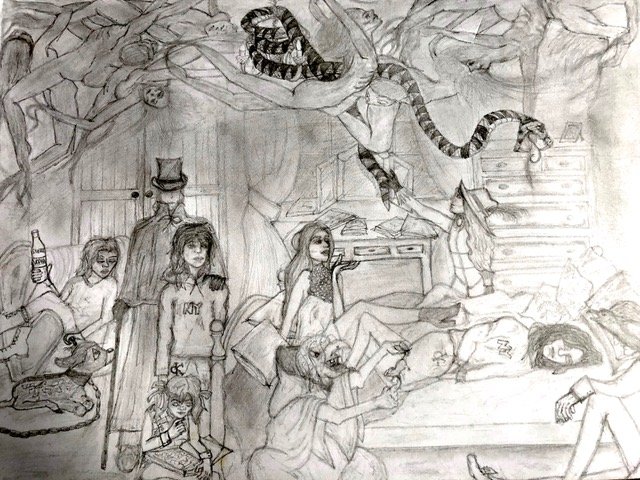
Schizophrenia is not the most understood of mental disorders. Oftentimes it is confused with Split Personality Disorder, when in reality it’s less cinematic and a lot more traumatic. Below is a poem inspired by the condition written by our psychology trainee, Anjili Gogna.
The sounds of voices, the unpredictable noises Leaving me confused but people tell me there’s no excuse The deterioration of my health Has encouraged me to find help
Nobody understands what it is Questions rise like tides in me too A never-ending cycle of pain and despair I wonder, does anyone care?
The thoughts that trouble me, is that man here to kill me, Or complete apathy, to the world and creation, This scares me and adds to my frustration, I turn to highs and drink to forget about my life on the brink
Some call it a mental disorder, some are plain harsher Everyone seems against me, ridiculing me or worse pitying me Leaving me very lonely and sad and completely mad Is this the madness everyone talks about only that?
Recently, I came across some help, Finally, someone could offer more than just resent, For once they called me a person with schizophrenia, Offered me medicine, talked with me rather than show hysteria, This helped manage my thoughts and the annoying voices just disappeared.
Now the day has arrived that I will make a brave entrance, Into this world that is new to me, I feel safe, it feels right The sight is clearer, possibilities are brighter There’s a sense of relief, gone is the despair Now behold, at last I am on the repair
We all know what stress is, but it can be hard to put into words. For one, there is no agreed definition. Stress is an overwhelming feeling in response to a situation or events that put us under pressure. Stress is also the effects on our bodies of these pressures.
In a recent poll by the Mental Health Foundation, three out of four felt so overwhelmed by stress that we were unable to cope in the last 12 months. Overeating and eating unhealthy food were the top coping strategies and were used by almost half of the respondents. One in three used alcohol to cope, and one in eight started or increased smoking.
All stress, however, is not the same. There is good stress, which motivates us to do our best at the things that matter. Small doses of good stress, for example in preparation for an exam, can help in keeping our focus and enthusiasm towards whatever we are trying to achieve. But beyond a healthy amount of stress, both health and performance deteriorate. Here is a two-step strategy to keep stress under control.
Step 1: Recognise when stress stops being helpful
Learn your early warning signs. These are the first signs that you might be experiencing more than just good stress. Examples include:
Physical exhaustion
Forgetfulness
Difficulty concentrating
Procrastination
Restless sleep
Avoidance of people or situations
Overeating or loss of appetite
Relying on junk food and alcohol
Not feeling your normal self
Feeling ineffective
Physical symptoms without a physical cause
Irritability and tearfulness
Difficulty relaxing
Low self-esteem
Step 2: Improve your coping skills
Prevention is better than cure. Once you notice the first signs of stress, take action:
Identify the underlying causes
Focus on what matters the most
Take a step back and look at the bigger picture
Talk to supportive friends and family
Eat healthily, reduce smoking, alcohol, and caffeine
‘People often assume that Connor must be amazing with art or music. He’s very bright but in a very unique way. He struggles to understand the world the way we can, but sees and senses so many things that other people don’t.’ Father of Connor, 9 years old with autism
In this current day and age, autism awareness is growing exponentially. However, there are still many common misconceptions about autism held by many, which can cause issues with autism being recognised and hinders support being provided to the people who do suffer from autism in a variety of ways.
Here, we want to shed some light on these misconceptions and most commonly held myths with the hope to be able to change thinking and attitudes towards this neurodevelopmental disorder.
Myth 1: AUTISM IS LINKED TO VACCINES
Possibly the biggest and most damaging misconception is the claim proposed by Andrew Wakefield, that the Measles, Mumps and Rubella (MMR) vaccine causes autism. This fraudulent claim led to the public disgracing of Dr Wakefield for a number of reasons and his claim was repeatedly disproven in subsequent years in many high quality research studies that proved there was no link between vaccinations and autism.
Myth 2: AUTISM IS A DISEASE
Contrary to popular belief, autism is not a disease. It is a developmental disorder characterized by differences in communication, behavior, and social interaction. Viewing autism as a disease implies that it needs to be cured, which can be harmful and misleading. Instead, it’s important to recognize and respect the unique perspectives and strengths of autistic individuals.
Myth 3: PEOPLE WITH AUTISM LACK EMPATHY
A prevalent myth is that people with autism lack empathy, which is simply untrue. While individuals with autism may process emotions differently, many are deeply empathetic. They may express their empathy in ways that are not immediately recognizable to others, but that does not diminish their capacity for understanding and sharing the feelings of others.
Myth 4: AUTISM IS A CHILDHOOD CONDITION
Autism, a lifelong developmental condition, affects individuals in unique ways. While many people commonly associate autism with children, it’s important to recognise that there are actually more adults than children living with autism, particularly in the UK. This highlights the necessity for ongoing support and understanding throughout a person’s life.
Research indicates that with the right support, individuals with autism can experience significant improvements in various areas of their lives. This support can include specialized educational programs, therapeutic interventions, and community resources tailored to the needs of autistic individuals.
One of the areas where individuals with autism can see positive change is in language and communication skills. With appropriate interventions, such as speech therapy and communication devices, many people with autism can enhance their ability to express themselves and understand others. This improvement can lead to better social interactions and a higher quality of life.
Anxiety is a common challenge for many individuals with autism. However, research suggests that with the right strategies and support, anxiety can be effectively managed. Techniques such as cognitive-behavioral therapy, mindfulness practices, and sensory integration therapy have been shown to help calm anxiety and improve overall well-being.
While autism is indeed a lifelong condition, the potential for positive outcomes exists at every stage of life with the right support.
Supporting individuals with autism is a community effort, and by fostering an inclusive environment, we can help create opportunities for everyone to thrive.
Myth 5: AUTISTIC PEOPLE HAVE SPECIAL TALENTS
Many parents of individuals with autism and those with autism are asked this extremely frustrating question and often come across as condescending. It’s important to remember that having autism does not automatically equate to possessing extraordinary abilities. Just like neurotypical individuals, people with autism have a wide range of strengths and weaknesses. Recognising and celebrating these strengths is essential in promoting a more inclusive and understanding society.
There is some truth in the fact that people with autism can have higher abilities in certain functions.
Research indicates that about 28% of individuals with autism exhibit specific abilities that stand out significantly. These abilities, often referred to as “islets of ability,” can manifest in various forms:
Mathematical Skills: Some individuals with autism have an exceptional ability to solve complex mathematical problems, often with little to no formal training.
Artistic Talent: Many autistic individuals possess extraordinary artistic skills, creating intricate and imaginative works of art.
Memory: Enhanced memory abilities, such as the ability to recall vast amounts of information quickly and accurately, are also common.
Musical Talent: Some may have perfect pitch or the ability to play instruments by ear without sheet music.
Myth 6: AUTISTIC PEOPLE HAVE LEARNING DIFFICULTIES
Many autistic people are very able and independent, with the right support and a suitable environment most will do very well in a variety of area of work and leisure.
One common misconception is that individuals with autism who take longer to process information do not understand it. This is not the case. In fact, the unique cognitive processes of autistic individuals can bring about distinct strengths and advantages.
Some autistic people may require additional time to process information, which is a reflection of their unique neurological wiring, not their level of comprehension. This slower processing time allows for thorough analysis and a deep understanding of the information at hand. By taking the time to process in their own way, autistic individuals can often uncover insights that might be overlooked by others.
Strengths of Autistic Individuals
The strengths of autistic individuals can be significant and varied. Among these strengths are:
Attention to Detail: Many autistic people have an exceptional eye for detail, which can be advantageous in fields that require precision and accuracy, such as coding, engineering, and quality control.
Pattern Recognition: A remarkable ability to recognise patterns is another common trait. This skill can be particularly beneficial in data analysis, mathematics, and scientific research, where identifying patterns is crucial.
Focus and Persistence: Autistic individuals often exhibit a strong ability to focus intensely on tasks, allowing them to work on projects for extended periods without losing concentration. This can lead to high-quality work and innovative solutions.
Myth 7: AUTISTIC PEOPLE ARE ANTI-SOCIAL
Autistic people may need extra support with social skills or interact differently with the world around them, but most autistic people enjoy having relationships.
Those with autism express their difficulties in different ways. Some are quiet and shy or avoid social situations, others speak too much and struggle to have normal two-way conversations. Implicit communication can be confusing for autistic people and things such as body language, tone of voice and sarcasm can be difficult for them to read. These challenges can make it difficult to make friends, build relationships or get on at work; things neurotypical individuals often take for granted.
Taking time to get to know autistic people and understand their differences in an environment where they are happy makes all the difference
Myth 8: ONLY BOYS ARE AUTISTIC
Although autism is significantly more prevalent in boys than in girls, it maybe a matter of it not being recognised in girls as much. Girls are more likely to ‘mask’ their autism features, and are more likely to learn the skills to interact with the rest of the world more than the boys. This can mean that girls with autism are diagnosed much later in life than boys.
Myth 9: AUTISM IS CAUSED BY BAD PARENTING
Autism is a developmental disorder and definitely not caused by bad parenting. Research has proved that parenting is not to blame for the causation at all. However, parenting style can certainly equip an autistic child with the tools to better cope with the world and affect their behaviours in the future and throughout life. But it is not the root cause of autistic behaviour.
Conclusion
We need not look at autism as a terrible disorder with a low ceiling of promise, but as a marvelous opportunity to look at the world through a different lens and walk in different shoes. If you or someone close to you needs support for mental health issues, please do not delay seeking out help. There are people who can help you.
Hello all,
As we enter the joyous New Year, we look retrospectively at the positive moments that 2017 offered to us. One such moment was the Gatsby Christmas Charity Fundraiser, held here at the Oaktree clinic on the evening of the 1st of December. This was held with the aim of setting up a pro bono fund to subsidise our psychological and psychiatric services for young adults and children who have difficulties fulfilling the financial commitment of receiving care. Here at The Oaktree Clinic, we believe that every person has the right to high quality care, regardless of race, gender and socioeconomic status.
Attracting an attendance of approximately 80 people, along with the help of our generous guests, we raised a total of 1200GBP, a massive step towards helping our close-knit community. The efforts of the Oaktree staff resulted in a very successful raffle and auction. The selection of 7 different prizes in the raffle and multiple pieces of elegant artwork proved to be in high demand.
Alongside some lovely appetisers, we got the pleasure of listening to two very talented singers: Titine Lavoix and Rhea Deshpande. Drawing all the guests to one room with only their voices, their talents clearly encapsulated the attention of all the guests, singing various numbers from the early 20th century era.
Later on, after some more food and drinks, it seemed like the energy of the guests began to bubble over. The power of dance allowed everyone some release. Two instructors from Smooth Salsa Dance Company held an interactive Salsa workshop, a hit with the majority of the guests, by the end, could differentiate their right and left feet!
We would like to thank all the guests who attended and all who donated to help make this event a success. Also thanks to Dr Meetu Singh, Dr Minnie Joseph and the Oaktree staff for setting up and carrying out a successful event. Thanks should also go out to the plethora of companies, businesses and the two artists: Alexander Rhys, Patt, John Hill, Mezzo Company, Hair Boutique, and Sky Clinic who donated cash sums, vouchers, and artwork for the benefit of our cause.
Artist Biography
Pat Short: I design and create highly stylised, organic stoneware pieces. My work is influenced by my passion for the natural world and a desire to create pieces that reflect the beauty of forests, stream and oceans. I trained as a Cartographer and discovered clay later in life when I took some amazing classes at the Midlands Art Centre in Birmingham.
http://www.studiopottery.co.uk/profile/Pat/Short
Alexander Rhys:
Alexander Rhys is based between Birmingham and London, UK. His work has been sold and published in New York, London, Los Angeles ,Chicago and Amsterdam . Alexander Rhys studied Fine Art at Bath Spa University, UK, where he explored the role of Art in Therapy. His unique works manipulate acrylics with the aim to take the viewer on a journey of finding the ordinary, extraordinary. Rhys’ global and diverse clients include outdoor advertising giants Clear Channel and leading Kenyan hip-hop artist Octopizzio
Alexander Rhys launched his online gallery and store to provide the opportunity for people to enjoy and purchase his work. Alexander Rhys is proud to be supported by the Prince’s Trust. Alexander Rhys offers a bespoke commissioning service. If you find a piece of work on Instagram or in the Gallery that you would like to inspire a bespoke commission, please email hello@alexanderrhys.com.
Athletes strive to reach their ultimate potential and sometimes even pursue super human targets, attempting to master their own bodies. Testing the boundaries of physical selves, putting themselves through the gauntlet everyday to reach the pinnacle of their individual performance and beyond. The notion of the ‘perfect’ athlete seems to be a chimera in the world of sports for coaches.
An individual fully synergising the multitude of different facets that construe ‘perfection’ is a rarity. Both physical prowess and a superior level of mental strength is needed, but the latter overlooked by many. The willpower, resilience and mental stability of athletes are tested day in and day out, in training and during competitions.
However, the expectation that one can be totally in control of their thoughts and cognitive processes at all times may become unreasonable, even impossible. This effort can then extend to an urge to control the behaviour of others.
The battle between the competing athletes can then begin on two fronts, physical and psychological. One of such ‘psychological warfare’ strategies, which is alarmingly common, to gain a mental edge during competition, is ‘trash talk’. Both players and spectators at all levels of sport use this dubious strategy. Some examples of ‘trash talk’,
“I’m just looking around to see who’s gonna finish second.” Larry Bird (1968-NFL)
“I’m not worried about the Sacramento Queens. Write it down. Take a picture.”- Shaquille O’Neal (2003-NBA)
“Float like a butterfly and sting like a bee…his hands can’t hit what his eyes can’t see.”- Muhammed Ali (Boxer)
Trash talk has been shown to drastically impact on performance, its effect seems to increase exponentially when players are losing as they feel that they have no control over the situation. Their focus shifts from “winning†to attaining a personal victory by satisfying their impulse of retaliation. A lack of respect seems to be a frequent trigger, causing heated exchanges on the pitch and a resultant change in performance.
HOW TO DEAL WITH TRASH TALK
There are a number of strategies one can employ to deal with and prepare for trash talkers.
Mental imagery: visualising yourself in situations where you are resilient and calm.
Self-talk (motivational affirmations e.g. mantras).
Meditation: Clearing your head and maintain peace within yourself.
All elicit positive results, helping individuals tune out negative thoughts (doubts, worries, insecurities) and external stressors (fans and opponents).
Athletes with an understanding of this psychological battle, with well-developed skills in their ability to remain focused will retain composure in the face of trash talk. They fully immerse into their performance, remaining unperturbed by the words of their opponents and WIN.
Author: Varun Deshpande, Psychology Assistant, The Oaktree Clinic
I, along with my colleague, Dr Meetu Singh took the opportunity to attend a conference, with a view to further enhancing our knowledge of the latest research on rTMS (Repetitive Transcranial Magnetic Stimulation). It was a fruitful day! I am therefore taking this opportunity to write about this innovative treatment.
rTMS is one of the new and innovative brain stimulation treatments in addition to Vagus nerve stimulation (VNS), Magnetic Seizure therapy (MST) and Deep brain stimulation(DBS). Electro-convulsive treatment (ECT) is the best studied and utilised physical treatment for depression.
Brain as widely known, is an electrical organ that functions through electrical signals being passed between nerve cells. rTMS uses magnetic stimulation to activate or inhibit this electrical activity depending on the disorder. rTMS is based on Faraday’s law of electromagnetic induction i.e.- electrical activity in the brain tissue is modulated by a strong magnetic field. The rTMS machine produces brief pulses of electrical current inside a coil and this in turn generates this strong magnetic field that passes through the scalp and skull painlessly, activating the neurons in the brain. High frequency rTMS facilitate brain tissue excitability while low-frequency rTMS can suppress activity in the hyper-aroused brain, for example in anxiety disorders. Low or high frequency rTMS can be used solo or in combination, depending on the mental disorder being treated.
Unlike ECT, in which electrical stimulation is more generalized, rTMS is targeted onto a specific site of interest in the brain. Another major difference is that while ECT effects are through causing fits, rTMS causes changes by painless magnetic waves directly stimulating the tissue. It therefore does not require anaesthesia or admission into hospital. Also, this understandably improves the side-effects profile and is better received by the patients. Unwanted effects may include scalp pain, headache or burning sensation locally, none of these tend to last long. Rarely, when given in very high doses (not the currently available and approved doses) it has caused seizures. There is also no loss of memory, unlike that reported with ECT. Patients may complain of scalp pain, headache or burning sensation, which can appear during the treatment and do not last long.
First developed in 1985, it has been studied extensively for use in depression and chronic pain. In 2008, the FDA approved rTMS for use in patients who did not respond to at least one antidepressant medication in the current episode or did not want to take medication due to side effects. National Institute of Clinical Excellence (NICE), UK, approved rTMS for treatment of depression in 2015, after careful consideration of published research. It is now offered in USA, Canada, Germany, Japan, Australia and UK. rTMS has produced encouraging results in treatment of many other disorders both mental (e.g. anxiety disorders, eating disorders, PTSD) and physical (e.g. Post- stroke rehabilitation, tinnitus, migraine, chronic intractable pain) apart from depression.
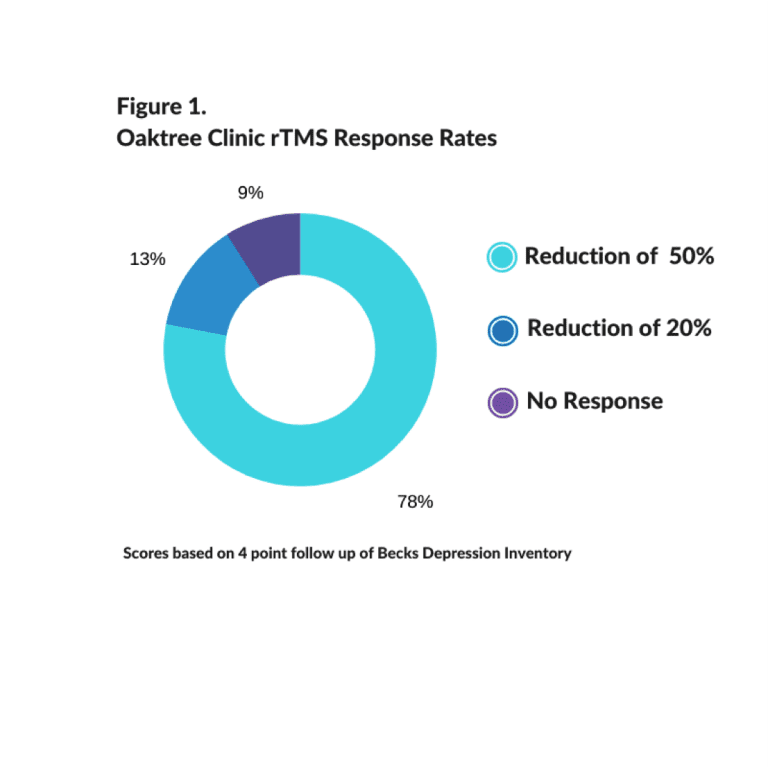
Future of rTMS appears to be bright; as it gradually becomes more known amongst medical professionals as well as patients. Encouraged by the efficacy and tolerance to rTMS, Oaktree Clinic has initiated this service in September 2016. The results here since then with this form of treatment have been nothing short of phenomenal.
Dr Das is a Consultant Psychiatrist with experience in assessing and treating the whole range of mental health & psychological issues in older adults. She works within the NHS and Private sector. Dr Das has special interest in treating memory problems (Adults of all ages), Alcohol & Substance Misuse in Older People and Physical & Mental Health issues in Older People with forensic history.
I recently saw a 72yr old man in my clinic whose family have noticed gradual worsening of memory. He is observed to be missing things in day today life which he previously would have happily paid attention to or remembered. He lives on his own having lost his wife quite suddenly two years ago. He did not cope very well, became depressed, had significant problem with sleep and started to withdraw socially. He was started on antidepressant and hypnotic to help sleep. He had started to take more than prescribed hypnotics, cut down following a consultation with GP. He has started to drink 3-4 pints of beer most nights. He is also on co-codamol for widespread osteo-arthiritis. There is past history of anxiety & depression for which he sought help. He said that he, all his life drank heavily but never had any problem so did not seek help. He has history of hypertension and a lifelong heavy smoker, has cut down to 10 a day recently.
I recently attended a college conference on addiction and in the same week saw a patient (mentioned above) that highlights the complexities an older adult with substance (alcohol/drugs) misuse may face or present to a practitioner. I thought I’d pen few lines down.
The first UK based report of the older Person’s substance misuse came out in June 2011, followed by a comprehensive cross-faculty report on substance misuse in older people in 2015. I am aware that a further review is due this year.
How common is the substance misuse problem in older adults?
The proportion of older adult in the population is increasing and projected to double by 2031. The number of older adults with substance misuse problems is also reported to be increasing. Substance misuse is top ten risk factors for premature death and health problems and rate of death due to substance misuse is more in older adults than younger people.
Substance misuse problems in older adults are most often associated with the misuse of alcohol and over-the-counter (OTC) and prescription drugs. Older adults frequently show complex patterns of substance misuse; alcohol use with prescription medications, tobacco, over-the-counter drugs or illegal drugs. Multiple drug dependence aka polypharmacy is a particular problem in older adults with physical and mental health problems.
In recent data released from Office of National Statistics (ONS) for England shows that Baby Boomers (people aged 45 and over) are drinking frequently and at more hazardous level. Alcohol related hospital admissions have increased by 64% in a decade and highest ever level. A few older adults use illicit substance, mostly marijuana, however this is projected to increase as the over 45yrs old who use illicit drugs, get older.
Majority of older adults with substance misuse problems are simply continuing a pattern of behaviour or addiction that began earlier in their lives and invariably have a family history of alcohol and drug addiction. About a third of older adults develop substance misuse problem in the later years, usually in response to bereavement, social isolation or lack of social support.
Physical and psychological factors associated with substance misuse in older adults
As people age, body loses muscles, gain more fat as a result metabolize substance slowly, develop increased sensitivity and reduced tolerance. The kidneys and liver may not be functioning as well. Alcohol consumption in the presence of other medical conditions or medications may create danger by causing or complicating medical conditions, compound medication interactions and increase falls or confusion. It is not uncommon to find lack of communication between the physician and the older person to allow correct dosing, titration, interactions and side-effects leading to multiple medications being prescribed for medical problems.
Misuse of alcohol and drugs can affect physical health; hypothermia, stroke, heart disease, cancer and poor liver functioning. Psychological problems like self-neglect, anxiety, depression and insomnia are common. Long-term use leads to dementia and cognitive impairment.
We cannot ignore the fact that drinking and drug use can have detrimental effects on the near and dear ones, causing anxiety, stress and sometimes relationship breakdowns.
Difficult to identify the problem
Research show that physical, social, psychological and legal problems associated with substance misuse in older adults mean they are likely to have regular contact with health and social care services. However, early identification of substance misuse is more difficult than in younger people.
The nature and pattern of older adults substance misuse make the problem less obvious; they consume substance at home, in local pubs or in social settings, less likely to be involved in trouble with the police, get into arguments or miss work due to substance use. Research has identified that family, care-giver and clinician may be complicit in the addiction process in the older adults. Substance misuse is a hidden problem and Royal college of Psychiatrists have quite rightly referred older adults with substance misuse problem as ‘our invisible addicts’. Health and social care professional may not always spot heavy drinking or drug misuse in older adults. Older adults may not talk about their misuse due to perception of stigma, shame or embarrassment, the effects of alcohol or drug misuse may mimic physical or mental health problem, and most importantly they are often not asked the question regarding alcohol or drug use as they are assumed not to have the problem.
Pooling help
Health professional generally find easier to treat alcohol and drug problems in older adults than in younger people as they are motivated and want more contact with their family members especially grandchildren.
Older adults who misuse substances may have complex or multiple needs that are often difficult to assess and may warrant further investigations. A comprehensive assessment, including physical and mental health examination is needed. Additional corroborative history, laboratory tests would assist identification.
Screening is a brief process that aims to determine whether an individual has a drug and/or alcohol problem, health-related problems or is showing signs of risk behaviours. Several screening tools are usually accurate in identifying alcohol misuse in older adults; Cut-down,Annoyed,Guilty,Eye-Opener (CAGE); the Short Michigan Alcoholism Screening Test-Geriatric version (SMAST-G); and the Alcohol Use Disorder Identification Test (AUDIT). While screening is important, it may not always lead to effective treatment. Brief interventions e.g. counselling and education at the primary care setting help. Psychosocial interventions, such as CBT, motivational interviewing, as well as supportive, non-confrontational approaches and group therapy for older people are likely to be effective.
Self-help groups e.g. AA exclusively for older adults are better, so do specialized treatments; outpatient, detoxification, inpatient, residential and recovery services tailored to the needs of older people. It is critical to understand, no one-size-fits-all approach.
Limited research to understand medication misuse in older adults show that computer-based and group health education may be useful. Medication leaflets/passports to accompany medications have been helpful. Medication review by professionals at primary and secondary care settings, in nursing homes are recommended. Brief information and intervention sessions represent viable options. Electronic medical records and databases that connect the information systems of physician and pharmacists are effective in addressing the problem.
Support organisations; Addaction, AgeUK and Alcoholics Anonymous all aim to improve later life through information, advise, campaigns, products, training and research.
Dr Das is a Consultant Psychiatrist with experience in assessing and treating the whole range of mental health & psychological issues in older adults. She works within the NHS and Private sector. Dr Das has special interest in treating memory problems (Adults of all ages), Alcohol & Substance Misuse in Older People and Physical & Mental Health issues in Older People with forensic history.
The Oaktree Clinic are proud to announce that we are planning an Open Day.
So on Thursday 25th May at 4:30pm The Oaktree Clinic is opening our doors to the public so we can help de-stigmatise the image of mental health in the community.
There will be drinks, refreshments and a whole load of knowledge that our mental health professionals will impart to those that attend.
The open day will feature the following sessions:
Quick Clinic
Overseen by Dr Singh, these sessions will give a chance to ask psychiatrists questions about cases, for advice, about psychiatry, about medicine or the brain. Basically it’s a psychiatry drop-in session! For those that feel they might need help, or those with a burning question about the mind.
Basic Intro to CBT
One of the most common forms of psychological treatment at the moment is Cognitive Behavioural Therapy or CBT. Here there will be explanations of what it is, how it works, what an initial session would consist of (the condensed version) and a patient example. As well as a Q&A.
rTMS
A revolutionary method for treating depression, anxiety and most other neuro-psychiatric issues, rTMS is currently not widely known in the UK. Here our trained professionals will explain about the treatment, how it works, the practicalities of the treatment, even how it feels! Then there’s also the science part – scans, the brain, and the relationship between psychiatry and neurology. Get completely clued up on this wonderful new treatment.
Tours
You may have seen The Oaktree Clinic from the outside, but now you can be guided around and see the causal warmth and unique decor of the interworking of Oaktree yourself.
Relaxation
The world is an increasingly stressful place… sometimes you need to take some time to relax and unwind. Experience some relaxation techniques such as muscle relaxation, visualisation and breathing relaxation.
Emotional Regulation
Life, as a great man once sang, is a rollercoaster. In our Emotional Regulation session we will give you the opportunity to learn some techniques for managing emotions in daily life.
The open day is from 4:30pm-7pm on Thursday 25th May at The Oaktree Clinic in Edgbaston. Hopefully we will see you then.
You may have heard in the news recently of a man whose wife was killed by an older driver who mistook accelerator for the brake. On the back of this traumatic incident, Mr Ben Brooks-Dutton has started a popular online petition for over 70s to be retested every year for fitness to drive. Many have agreed and yet some have posted some vile messages.
Generally speaking, older drivers are safe drivers for many reasons; they drive few miles, drive locally, and avoid rush hours and night driving. It is unfortunate that accidents involving older drivers often call attention to their driving.
Statistically speaking, the rates of fatalities increase slightly after age 70 and significantly more after 85. We all age differently, some more than others. Some have better physical and mental agility than others. The common denominator however is increasing age. With age come physical and mental changes that can affect driving abilities. The physical changes that are seen include: decrease in vision, hearing impairment, decrease in muscle strength, reduced flexibility in the joints and impaired co-ordination. Reduced motor reflexes can affect the threshold of reacting to a hazard on the road. Various medical conditions and medications also add to the physical health burden. Mental capabilities to deal with the melee of sensory stimulus and stressors on the road may also reduce.
It is of utmost importance that an older driver takes charge of their health and steps to stay safe on the road. Practical steps consist of regular health MOT (eyes, hearing, sugar and cholesterol level check-ups), making changes to the car for effortless driving (automatic car, adaptation for smooth steering and brakes) and being mindful of driving practices that may help limit accidents (keeping safe distance from the driver at the front, parking with an adequate space to get in and out, aware of crossroads and intersections etc). Being aware that if vehicles do not flow with the traffic and speed, road-rage is not uncommon. Digital technology in newer model of cars is generally considered to be distractions by the older folks. However if used appropriately they can be immensely useful. I am not surprised to hear three-point turning is going to be replaced by the test of ‘appropriate use of SATNAV’ in the driving test, in keeping with current trend and preparedness for the future.
The tricky stage is when concerns set in. Driving a car represents a sense of achievement (I know the very feeling when I passed my test!), a sense of control and independence. Understandably the thought of relinquishing driving is emotionally charged and not easy to absorb. Generally older people continue to drive confidently and safely. When, how and who are important aspects when considering conversation about driving limitations with an older person. Near misses, accidents, health changes and self-regulations may provide an opportunity to discuss concerns. Being sensitive and respectful of feelings of the older person towards driving is the first step towards sharing your concern. Having open, periodic and graded discussions about safe driving helps towards preparedness. Men may require repeated conversations compared to women. As per surveys, older persons generally like to hear of any concerns about driving from somebody they trust; spouse, elder children, or a close friend. Studies have shown that when the ultimate decision of cessation of driving has to occur, older persons prefer to hear hard facts from a doctor (GPs as the first port of call and secondary specialist like us, when there are health problems).
In my experience, conversation regarding driving cessation is akin to ‘breaking bad news’; requiring sensitivity, a minimum of two consultations, presentation of evidence of concerns (usually gathered from family or friend) and laying down the facts of how health issues impact driving abilities. A family dialogue with the older person ahead of seeing a doctor helps in the decision process. A doctor may refer a patient to a specialist-driving centre for a comprehensive evaluation.
Although the transition from driver to passenger is not easy, older people generally achieve a balance between safety and independence. Older people and families can avail informal advice from local charitable organisations e.g. AgeUK, AgeConcern and Alzheimer’s society. Written and formal advice are also available on DVLA website.
Dr Das is a Consultant Psychiatrist with experience in assessing and treating the whole range of mental health & psychological issues in older adults. She works within the NHS and Private sector. Dr Das has special interest in treating memory problems (Adults of all ages), Alcohol & Substance Misuse in Older People and Physical & Mental Health issues in Older People with forensic history.
Repetitive Transcranial Magnetic Stimulation (rTMS) is a treatment for adult patients with Clinical Depression and many other psychiatric disorders. It is effective, pain free and with few or no side effects. NICE has recently approved magnetic treatment for depression and is gaining in popularity in USA, Australia and the rest of Europe but not so much in the UK. This is a grand step towards neuromodulation and physical interventions in clinical mainstream psychiatry.
We have organised a workshop where professionals could not only refresh their knowledge about the latest research about efficacy of rTMS but also about the practicalities of working with the TMS equipment. The workshop is relevant for GPs, Psychiatrists, nurses and other mental health professionals who would like to know more about this groundbreaking and effective treatment. It is in collaboration with the Royal College of Psychiatrists.
The programme is as follows:
 09.15 – 10.15 – Overview of GMC complaints data and investigation process
10.15 – 11.15 – Revalidation update and reflection in the appraisal process
11.15 – 12.00 – Responding to complaints/the professional duty of candour
12.00- 12.45- Lunch
12.45- 1.30– Practicalities of rTMS treatment, Mr Andy Dixon, Technical representative from TMS equipment manufacturers
1.30- 2.15– Mechanism of Action of rTMS, Dr Meetu Singh, General Adult Psychiatrist & Director, Oaktree Clinic
2.15- 3.15– Research Evidence of efficacy of rTMS in depression and anxiety disorders, Dr Alex Kerr O’ Neill, Medical Director, Northamptonshire Healthcare NHSFT
3.15- 3.30- Tea and refreshments
3.30- 4.15– Evidence for efficacy of rTMS in Pain, Parkinson’s, Eating Disorders, TBA
4.15. 4.30– Conclusion and Discussion
We will have parking at the back of the building and will provide lunch & refreshments.
The cost is £75 which includes lunch and refreshments. Parking is available at the back of the building.
To book your place, contact Dawn Luck on 0121 314 0330 or by email: admin@oaktreeclinicmidlands.co.ukPayments
Card payments can be made by calling 0121 314 0330
OR
BACS payment, details below
To provide the best experiences, we use technologies like cookies to store and/or access device information. Consenting to these technologies will allow us to process data such as browsing behaviour or unique IDs on this site. Not consenting or withdrawing consent, may adversely affect certain features and functions.
Functional
Always active
The technical storage or access is strictly necessary for the legitimate purpose of enabling the use of a specific service explicitly requested by the subscriber or user, or for the sole purpose of carrying out the transmission of a communication over an electronic communications network.
Preferences
The technical storage or access is necessary for the legitimate purpose of storing preferences that are not requested by the subscriber or user.
Statistics
The technical storage or access that is used exclusively for statistical purposes.The technical storage or access that is used exclusively for anonymous statistical purposes. Without a subpoena, voluntary compliance on the part of your Internet Service Provider, or additional records from a third party, information stored or retrieved for this purpose alone cannot usually be used to identify you.
Marketing
The technical storage or access is required to create user profiles to send advertising, or to track the user on a website or across several websites for similar marketing purposes.