


According to the Health & Safety Executive 2013/14, in the UK 40% of workforce reported work-related stress. 1 in 5 visits to GPs are related to stress.
What causes this stress, I hear you ask? From research, heavy demand, lack of control over work, low level of support from colleagues and management, bullying and harassment, constant change, are the culprits. You know you are stressed when you start worrying about work at home, dread going to work, lose sleep, and become increasingly short tempered.
Here are some recognised Stress Busters to help you combat the strains of work-related stress:
- Recognise signs early
- Don’t bring work home
- Learn to say no.
- Always take breaks.
- A few minutes of exercise every day goes a long way.
- Speak to your supervisor; employers have a duty of care.
- Create a network of support: family, friends & colleagues
- Get involved in activities you enjoy outside work, ex: hobbies, voluntary work, learning new skills, something positive to cherish.
- Avoid smoking/drinking excessively to cope. Alcohol worsens low mood.
- Use time management strategies to work efficiently.
- Accept things you cannot change, like a full in-tray, irrespective of how hard you work.
- Learn Relaxation Techniques. Meditation & Yoga can help.
- Contact your occupational health department, they may be able to access professional counseling for you.
- Attack the root cause. Ask questions like: Do I like my job? Could I be better somewhere else?
If all above fails then seek professional mental health advice. Depression and anxiety disorders can come in the guise of stress. These are treatable disorders, requiring assessment, treatment and support.










 Here at The Oaktree Clinic we are never ones to rest on our past achievements. We always strive to be the best and up-to-date mental healthcare team we can be. This attitude to be the best has lead our clinicians to continue their training through the process of CPD.CPD stands for Continuing Professional Development. Simply put, it is “the holistic commitment of professionals towards the enhancement of personal skills and proficiency throughout their careersâ€.Five times a year our various mental health professionals meet up for a sharing of knowledge. Previous presentations have covered various far-reaching disciplines of mental health, from Neuropsychiatry, Child and Adolescent psychiatry to CBT, Mindfulness and much more. Each presentation, devised by our team, expands and updates our clinicians already vast knowledge base.While it would be easy to assume that with seven plus years training to become a qualified mental health expert would be enough education to last anyone a lifetime, our CPD sessions at Oaktree reinforce our skills, knowledge and make sure that you the client get a better experience.


 The Oaktree Clinic is celebrating World Mental Health Day by treating all those attending to a 20 minute free session of the famous Mindfulness therapy with tea and Prosecco on Friday the 14th of October.

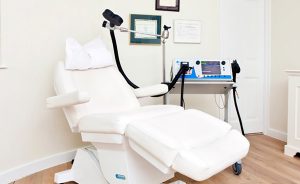 The Oaktree Clinic is the only service that can offer this ground breaking, innovative, side effect and pain free treatment in the West Midlands. It works by producing a strong magnetic field near the area of the brain responsible for the symptoms of depression, hence stimulating the brain cells. The client is wide awake during administration as anaesthesia is not required to undergo this treatment. It is a highly effective treatment for those who either do not respond to conventional treatment or cannot take or do not wish to take antidepressant medication or psychotherapy.Whilst being a well used intervention in Canada, Australia, New Zealand, the European Union, Israel and the United States, the UK has now started to embrace rTMS. The treatment has recently been recommended by the National Institute for Health and Care Excellence (NICE) for treatment of depression.At the London Psychiatry Centre the results from rTMS are very impressive with 74.2% of women and 58% of men recovering from the symptoms of depression in 4.3 weeks of treatment. With the same treatment protocols and supervision we are confident of success of this treatment at The Oaktree Clinic.We are currently taking referrals and carry out assessments and the treatment. If you believe that rTMS is the treatment for you,